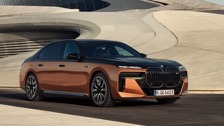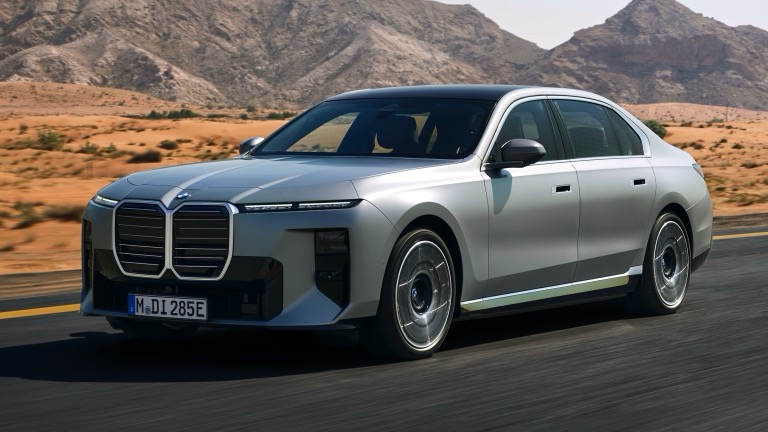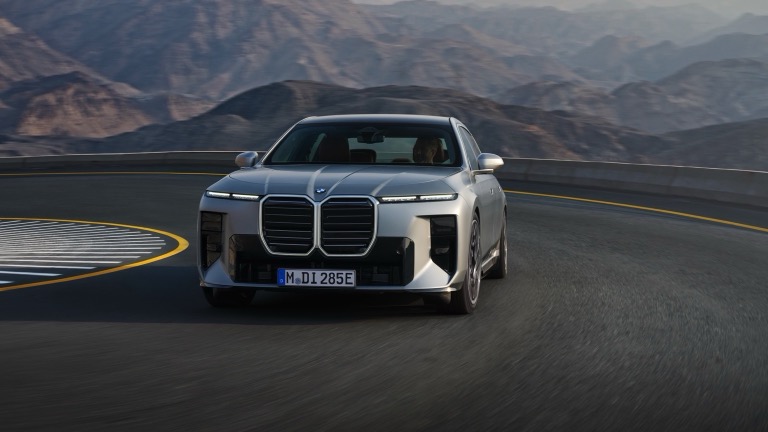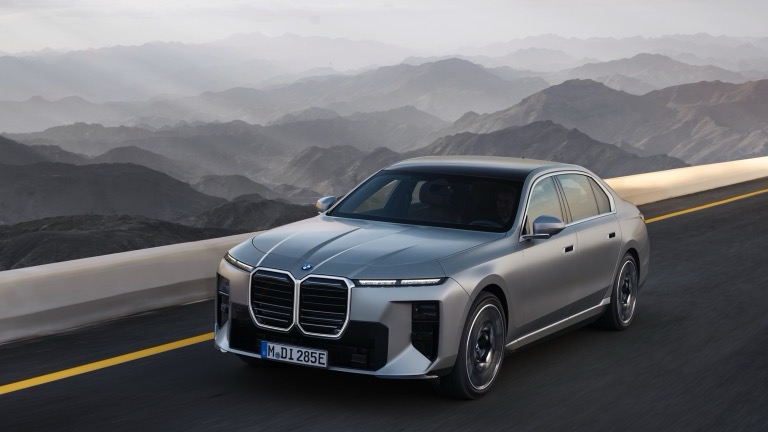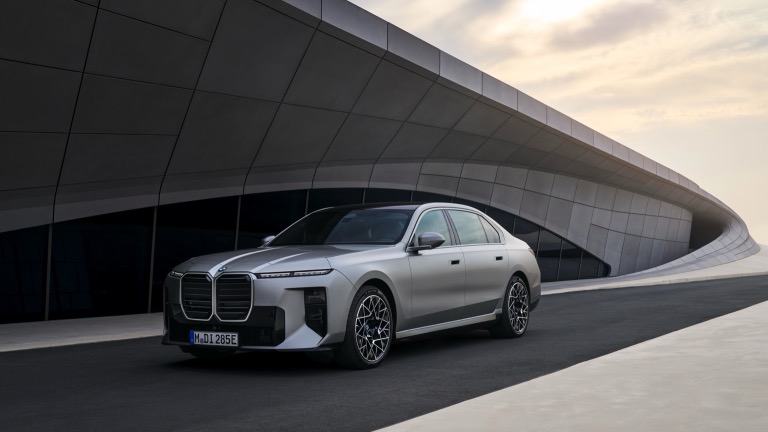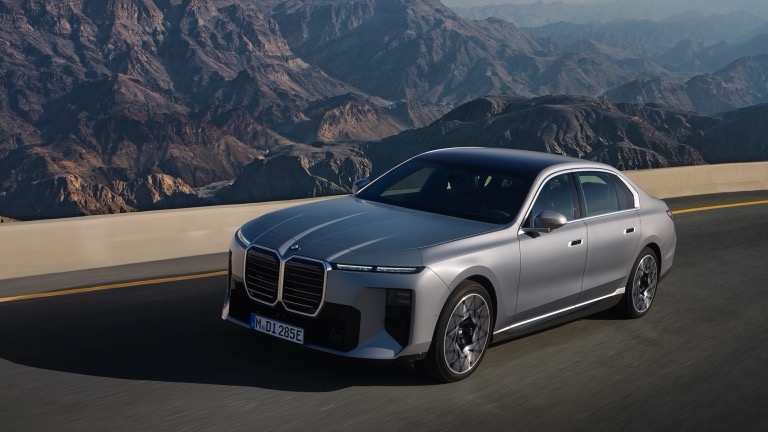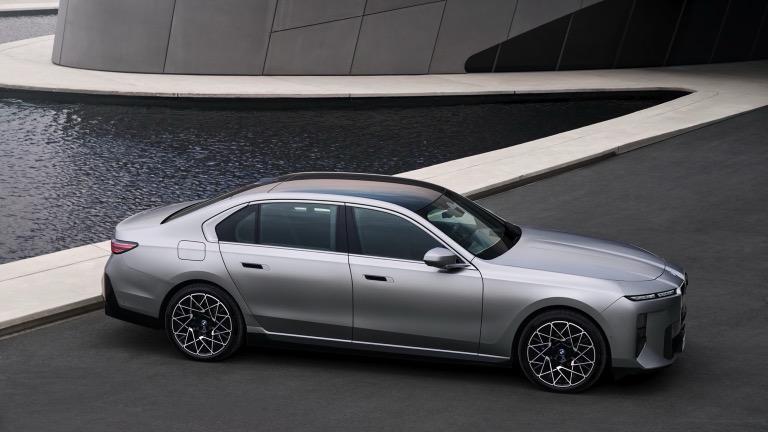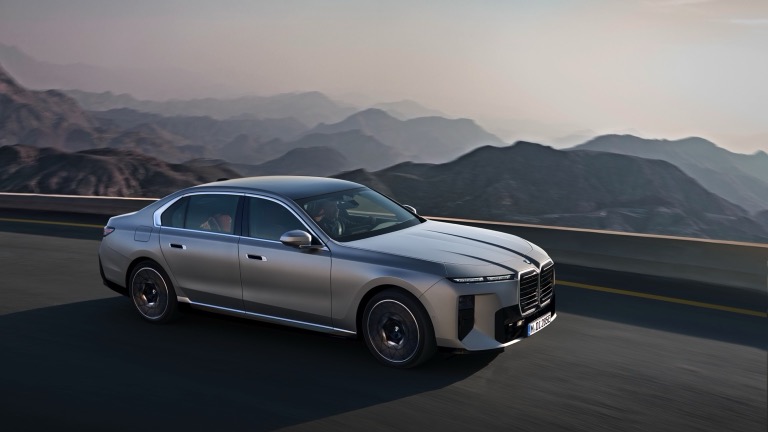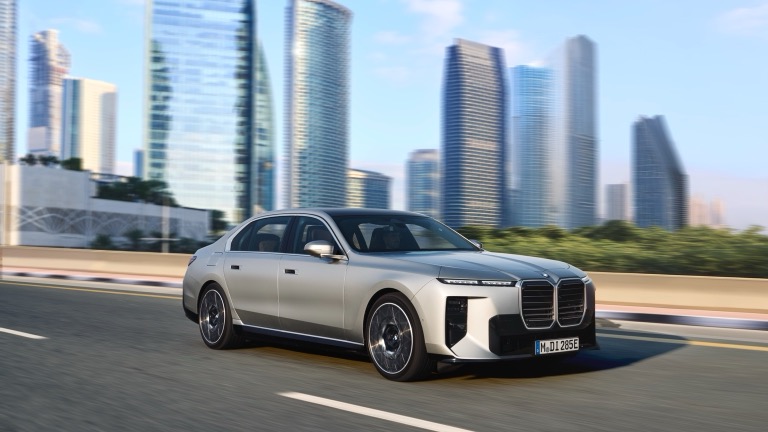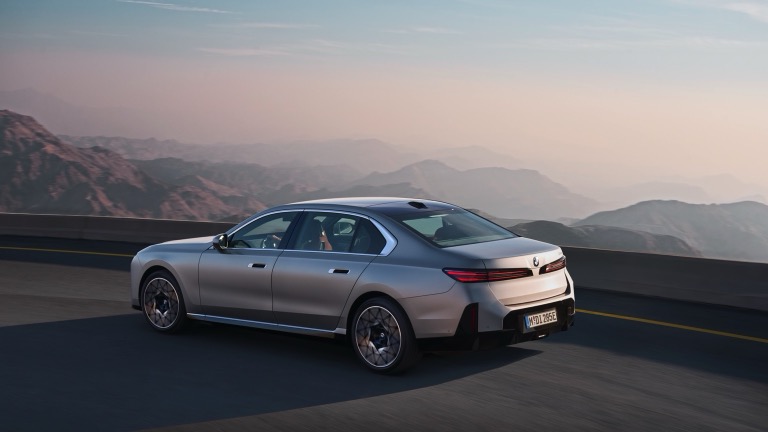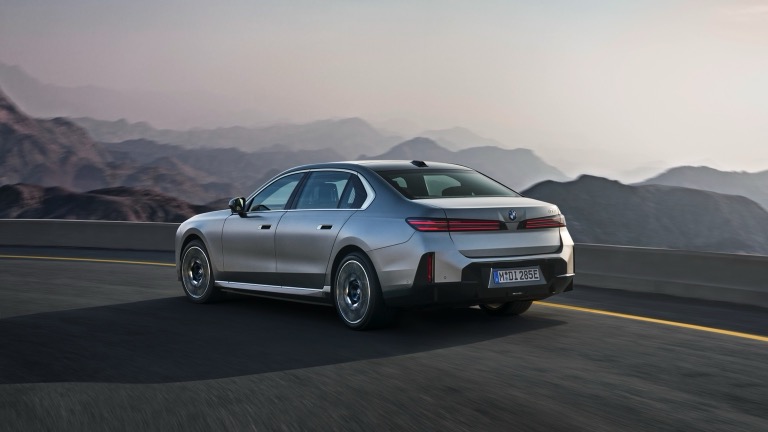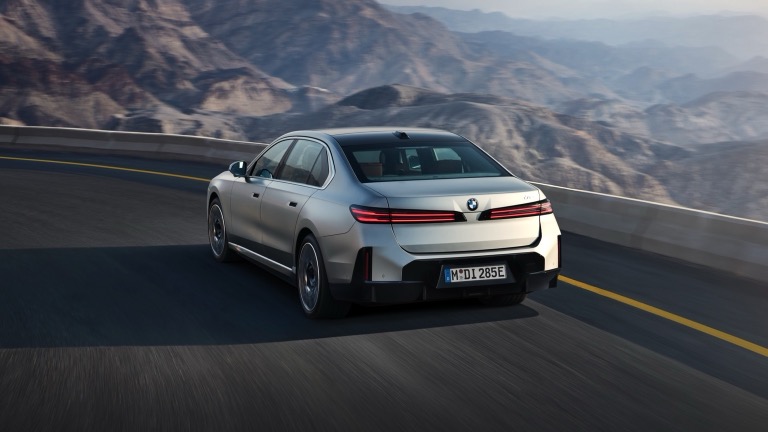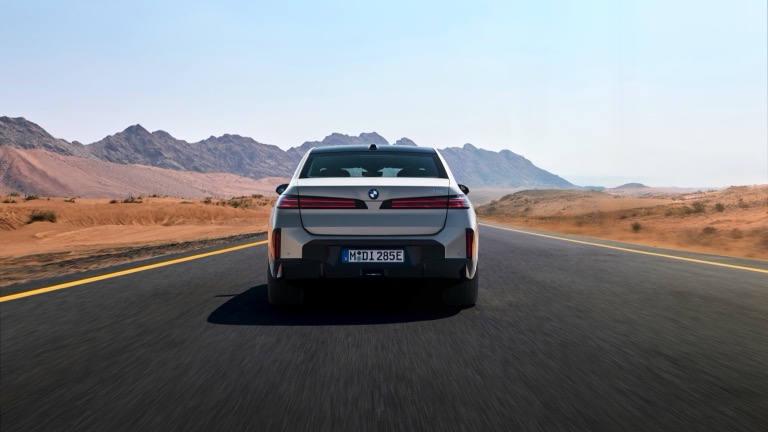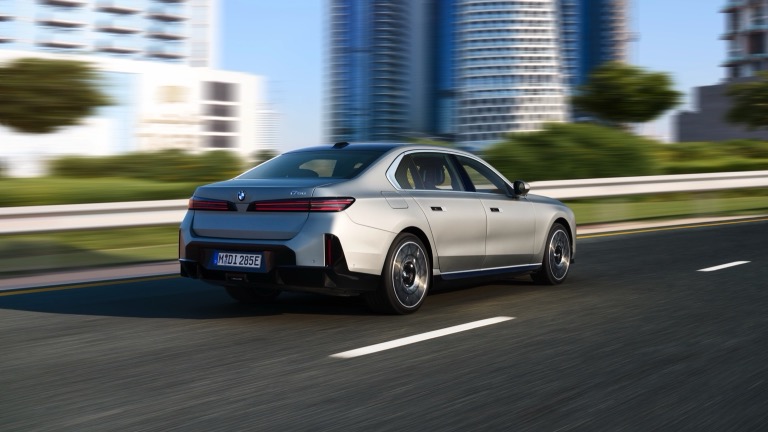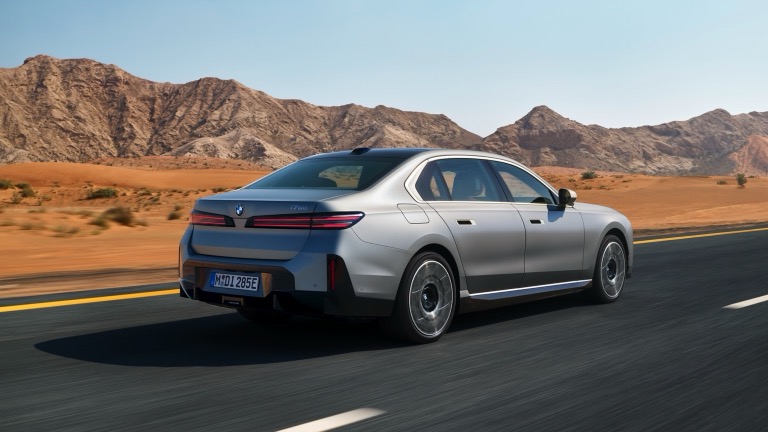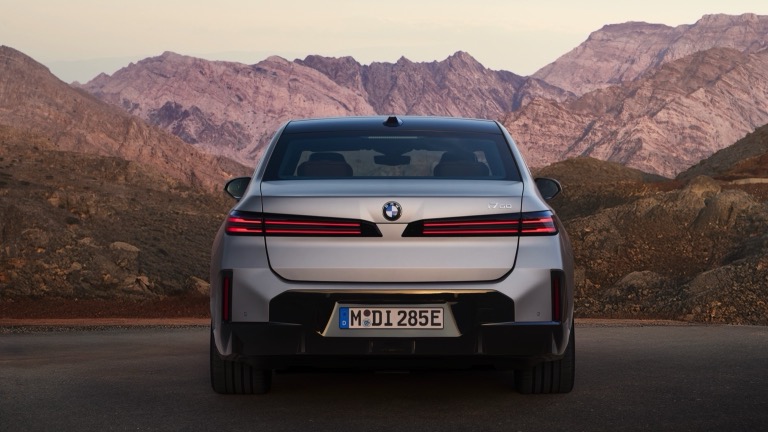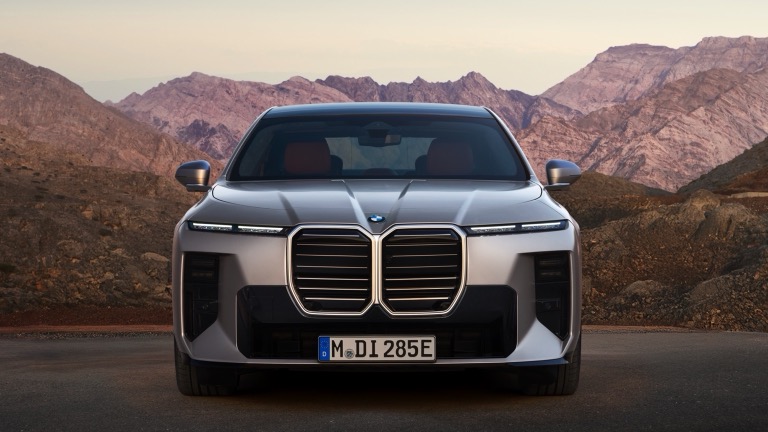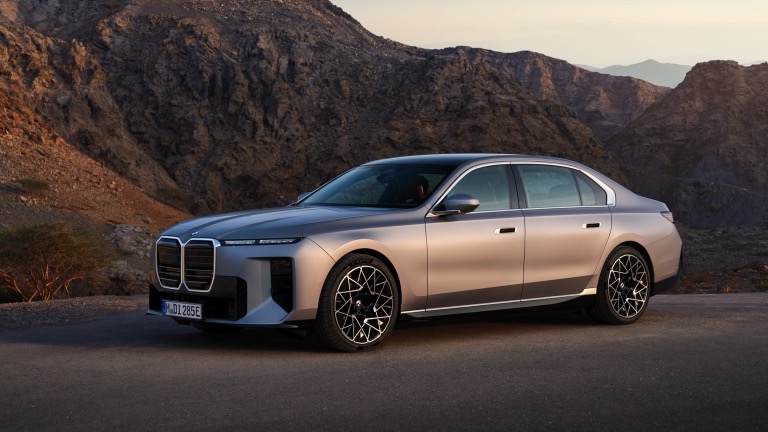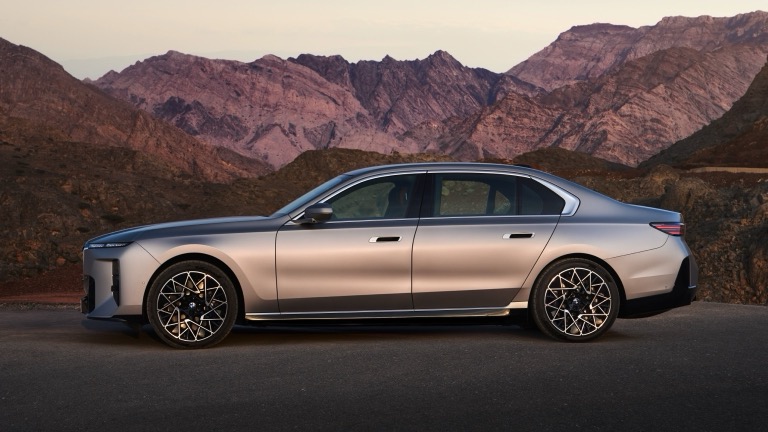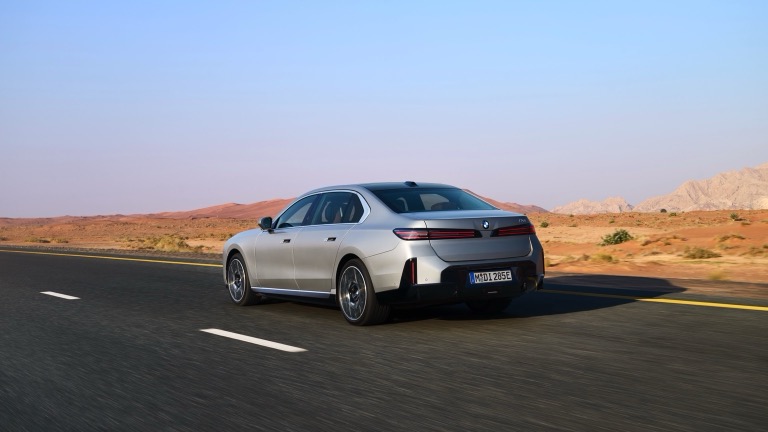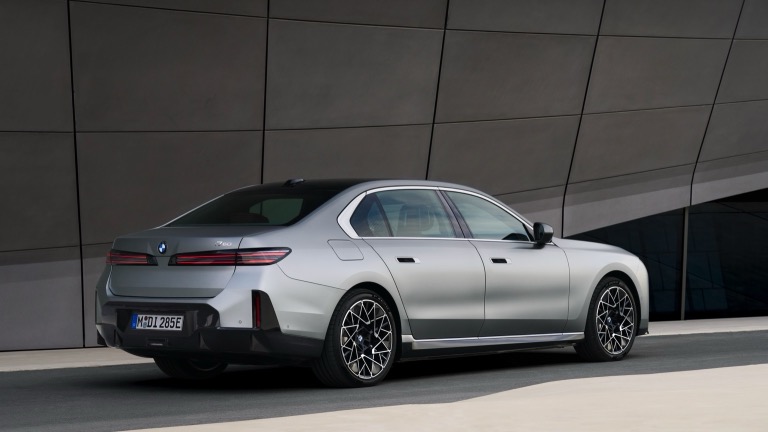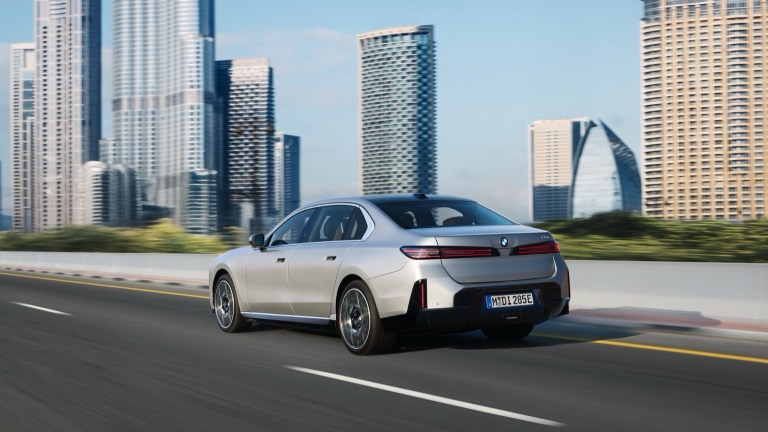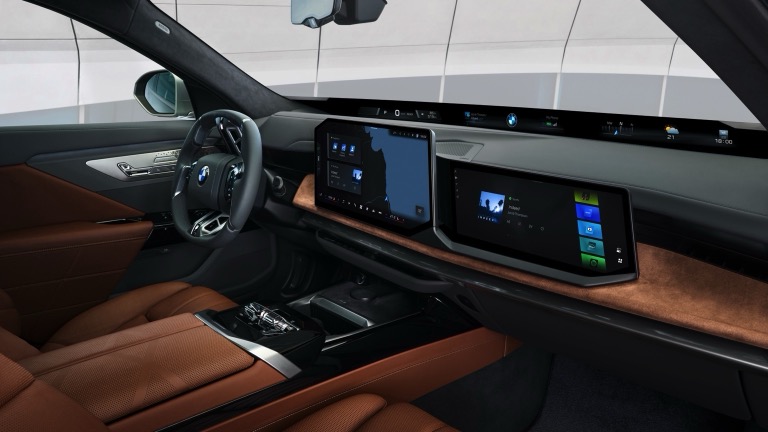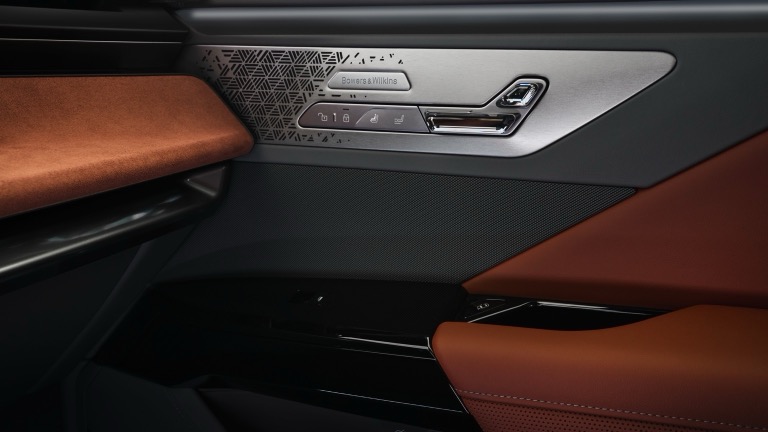
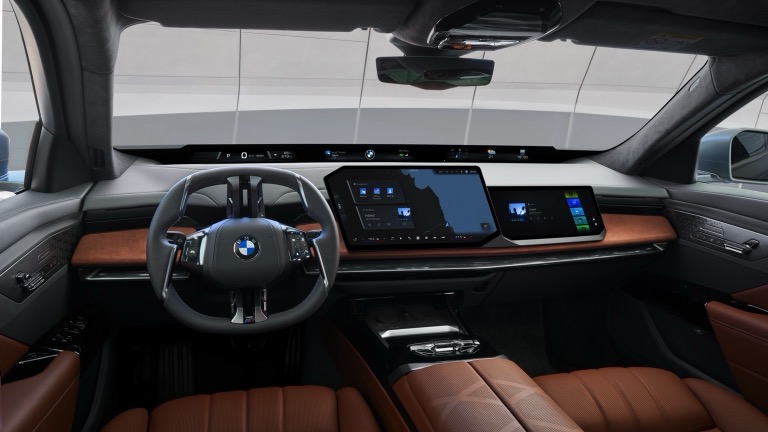
BMW i7 M70 xDrive (MY27)

Expected from July 2026

112.4 kWhUseable Battery

330 mi *Real Range

341 Wh/mi *Efficiency

This electric vehicle is not available yet

Specifications with an * are estimates.

Price

United Kingdom * £165,000
The Netherlands * €190,000
Germany €182,400

Available to Order

United Kingdom Expected July 2026
The Netherlands Expected July 2026
Germany Expected July 2026
Prices shown are recommended retail prices for the specified countries and do not include any indirect incentives. Pricing and included options can differ by region and do not include any indirect incentives. Dates shown are order dates. Click on a country for more details.

Real Range Estimation between 240 - 460 mi

City - Cold Weather * 320 mi
Highway - Cold Weather * 240 mi
Combined - Cold Weather * 280 mi
City - Mild Weather * 460 mi
Highway - Mild Weather * 305 mi
Combined - Mild Weather * 375 mi
Indication of real-world range in several situations. Cold weather: 'worst-case' based on -10°C and use of heating. Mild weather: 'best-case' based on 23°C and no use of A/C. For 'Highway' figures a constant speed of 70 mph is assumed. The actual range will depend on speed, style of driving, weather and route conditions.
(Advertisement)

Long Distance Suitability
4 / 5

First Leg Distance 244 mi
Charging Stop 0mi
Second Leg Distance 126 mi
Total Distance 370 mi
First Leg Duration 3h 34min
Charging Stop 15 min
Second Leg Duration 1h 50min
Total Duration 5h 39min
The 'long distance suitability' is a 5-star rating that indicates how suitable a vehicle is for long trips. The rating is based on the 1-Stop Range: the total distance a vehicle can cover with one charging stop of 15 minutes.

Battery

Nominal Capacity * 117.0 kWh
Battery Type Lithium-ion
Number of Cells No Data
Architecture 400 V
Warranty Period 8 years
Warranty Mileage 100,000 mi
Useable Capacity 112.4 kWh
Cathode Material NMC
Pack Configuration No Data
Nominal Voltage No Data
Form Factor Cylindrical
Name / Reference No Data

Charging

Home / Destination

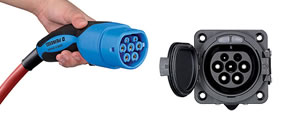
Charge Port Type 2
Port Location Right Side - Rear
Charge Power 11 kW AC
Charge Time (0->330 mi) 12h15m
Charge Speed 27 mph

Fast Charging

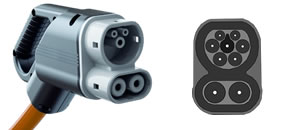
Charge Port CCS
Port Location Right Side - Rear
Charge Power (max) 250 kW DC
Charge Power (10-80%) 175 kW DC
Charge Time (33->264 mi) 28 min
Charge Speed 490 mph
Autocharge Supported No

Plug & Charge

Plug & Charge Supported Yes
Supported Protocol ISO 15118-2 & -20

Battery Preconditioning

Preconditioning Possible Yes
Automatically using Navigation Yes
(Advertisement)

Performance

Acceleration 0 - 62 mph 3.8 sec
Top Speed 155 mph
Electric Range * 330 mi
Total Power 500 kW (671 hp)
Total Torque 749 lb-ft
Drive AWD

Bidirectional Charging (V2X / BPT)

Vehicle-to-Load (V2L)

V2L Supported No
Max. Output Power -
Exterior Outlet(s) -
Interior Outlet(s) -

Vehicle-to-Home (V2H)

V2H via AC Supported No
Max. Output Power -
V2H via DC Supported No
Max. Output Power -

Vehicle-to-Grid (V2G)

V2G via AC Supported No
Max. Output Power -
V2G via DC Supported No
Max. Output Power -

Energy Consumption

EVDB Real Range

Range * 330 mi
Vehicle Consumption * 341 Wh/mi
CO2 Emissions 0 g/km
Vehicle Fuel Equivalent * 119 mpg

WLTP Ratings (TEL)

Range 426 mi
Rated Consumption 317 Wh/mi
Vehicle Consumption 264 Wh/mi
CO2 Emissions 0 g/km
Rated Fuel Equivalent 128 mpg
Vehicle Fuel Equivalent 153 mpg

WLTP Ratings (TEH)

Range 352 mi
Rated Consumption 369 Wh/mi
Vehicle Consumption 320 Wh/mi
CO2 Emissions 0 g/km
Rated Fuel Equivalent 110 mpg
Vehicle Fuel Equivalent 127 mpg
TEL = Test Energy Low | TEH = Test Energy High
Rated = official figures as published by manufacturer. Rated consumption and fuel equivalency figures include charging losses.
Vehicle = calculated battery energy consumption used by the vehicle for propulsion and on-board systems.
NOTE: The fuel equivalency figures are shown in IMPERIAL MPG. Figures in US MPG will differ significantly.

Real Energy Consumption Estimation between 244 - 468 Wh/mi

City - Cold Weather * 351 Wh/mi
Highway - Cold Weather * 468 Wh/mi
Combined - Cold Weather * 401 Wh/mi
City - Mild Weather * 244 Wh/mi
Highway - Mild Weather * 369 Wh/mi
Combined - Mild Weather * 300 Wh/mi
Indication of real-world energy use in several situations. Cold weather: 'worst-case' based on -10°C and use of heating. Mild weather: 'best-case' based on 23°C and no use of A/C. For 'Highway' figures a constant speed of 70 mph is assumed. The energy use will depend on speed, style of driving, climate and route conditions.
(Advertisement)

Dimensions and Weight

Length 212.4 inch
Width 76.8 inch
Width with mirrors 86.3 inch
Height 61 inch
Wheelbase 126.6 inch
Weight Unladen (EU) 6272 lbs
Gross Vehicle Weight (GVWR) 7297 lbs
Max. Payload 1190 lbs
Cargo Volume 17.7 cu ft
Cargo Volume Max No Data
Cargo Volume Frunk 0.0 cu ft
Roof Load 165 lbs
Tow Hitch Possible No
Towing Weight Unbraked 0 lbs
Towing Weight Braked 0 lbs
Vertical Load Max 0 lbs

Miscellaneous

Seats 5 people
Isofix Yes, 2 seats
Turning Circle 43 ft
Platform BMW CLAR
EV Dedicated Platform No
Car Body Saloon
Segment F - Luxury
Roof Rails No
Heat pump (HP) Yes
HP Standard Equipment Yes
* = estimated value. Average energy consumption and range based on moderate drive style and climate. Real-life values may differ significantly. Pricing information might not be actual for some regions. No rights can be derived from the information on this site.

Home and Destination Charging (0 -> 100%)

Charging is possible by using a regular wall plug or a charging station. Public charging is always done through a charging station. How fast the EV can charge depends on the charging station (EVSE) used and the maximum charging capacity of the EV. The table below shows all possible options for charging the BMW i7 M70 xDrive. Each option shows how fast the battery can be charged from empty to full.

Europe

Charging an EV in Europe differs by country. Some European countries primarily use 1-phase connections to the grid, while other countries are almost exclusively using a 3-phase connection. The table below shows all possible ways the BMW i7 M70 xDrive can be charged, but some modes of charging might not be widely available in certain countries.
Type 2 (Mennekes - IEC 62196)
Charging Point Max. Power Power Time Rate
Standard 11.0 kW On-Board Charger
Wall Plug (2.3 kW) 230V / 1x10A 2.3 kW 57h30m 6 mph
1-phase 16A (3.7 kW) 230V / 1x16A 3.7 kW 35h45m 9 mph
1-phase 32A (7.4 kW) 230V / 1x32A 7.4 kW 18 hours 18 mph
3-phase 16A (11 kW) 400V / 3x16A 11 kW 12h15m 27 mph
3-phase 32A (22 kW) 400V / 3x16A 11 kW † 12h15m 27 mph
Optional 22.0kW On-Board Charger
Wall Plug (2.3 kW) 230V / 1x10A 2.3 kW 57h30m 6 mph
1-phase 16A (3.7 kW) 230V / 1x16A 3.7 kW 35h45m 9 mph
1-phase 32A (7.4 kW) 230V / 1x32A 7.4 kW 18 hours 18 mph
3-phase 16A (11 kW) 400V / 3x16A 11 kW 12h15m 27 mph
3-phase 32A (22 kW) 400V / 3x32A 22 kW † 6 hours 55 mph

† = Limited by on-board charger, vehicle cannot charge faster.

(Advertisement)

Fast Charging (10 -> 80%)

Rapid charging enables longer journeys by adding as much range as possible in the shortest amount of time. Charging power will decrease significantly after 80% state-of-charge has been reached. A typical rapid charge therefore rarely exceeds 80% SoC. The rapid charge rate of an EV depends on the charger used and the maximum charging power the EV can handle. The table below shows all details for rapid charging the BMW i7 M70 xDrive.

  • Max. Power: maximum power provided by charge point
  • Avg. Power: average power provided by charge point over a session from 10% to 80%
  • Time: time needed to charge from 10% to 80%
  • Rate: average charging speed over a session from 10% to 80%
Combined Charging System (CCS Combo 2)
Charging Point Max. Power Avg. Power Time Rate
CCS (50 kW DC) 50 kW 50 kW 99 min 140 mph
CCS (150 kW DC) 150 kW 120 kW † 41 min 330 mph
CCS (350 kW DC) 250 kW † 175 kW † 28 min 490 mph
CCS (500 kW DC) 250 kW † 175 kW † 28 min 490 mph
This vehicle does not support Autocharge
This vehicle supports Plug & Charge

† = Limited by charging capabilities of vehicle

Autocharge: allows for automatic initiation of a charging session at supported CCS charging stations.

Plug & Charge: allows for automatic initiation of a charging session at supported CCS charging stations in accordance with ISO 15118.

Actual charging rates may differ from data shown due to factors like outside temperature, state of the battery and driving style.

BMW Claimed Specifications

The table below shows the claimed specifications from the manufacturer for charging the BMW i7 M70 xDrive. The specifications can differ from the table above for a variety of reasons. If real-world charge tests are available, these differences can be signifcant. If no real-world tests are available, the table above will be based on the manufacturer specifications as per the table below.

  • Max. Power: maximum charge power during charging session
  • Charge From: battery percentage (% SoC) where charging session is started
  • Charge To: battery percentage (% SoC) where charging session is ended
  • Time: time needed for charging session
BMW Claimed Specifications
Max. Power Charge From Charge To Time
250 kW 10 % 80 % 28 min

Long Distance Suitability

How suitable an electric car is for long trips depends not only on the range. How quickly the car can charge plays an almost equally important role. Whether an EV is suitable for long trips depends on the battery capacity, efficiency, and fast charging capability.

To easily compare cars among each other, a benchmark has been established that combines these factors into the total distance a vehicle can cover with one 15-minute charging stop: the '1-Stop Range'. Based on the 1-Stop Range, the 5-star rating is determined. The result of the benchmark is shown in the graph below.

1-Stop Range

+

5-Star Rating

+

Revision of Rating

+

BMW i7 M70 xDrive
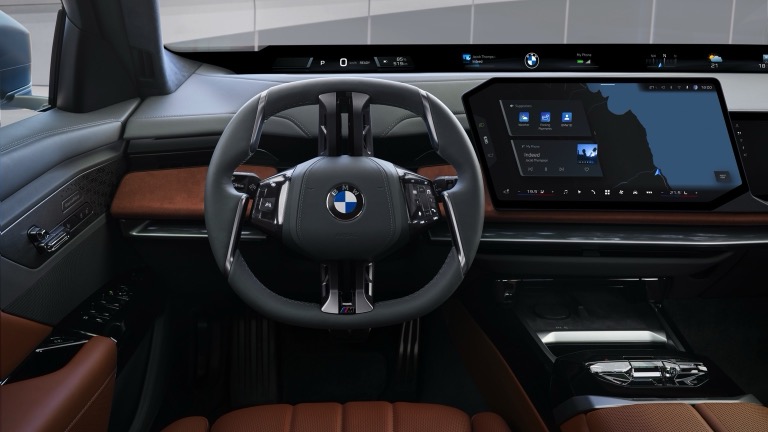
4 / 5

0
1
2
3
4
5
277 mi
4h 3min
15 min
142 mi
2h 5min
244 mi
3h 34min
15 min
126 mi
1h 50min
370 mi (5h 39min)
218 mi
3h 12min
15 min
112 mi
1h 39min
331 mi (5h 6min)
0 mi
100
200
300
400
Mild Weather
419 mi 1-Stop Range
Average Conditions
370 mi 1-Stop Range
Cold Weather
331 mi 1-Stop Range
(Advertisement)
Vehicle 1
Vehicle 2
Vehicle 3
Vehicle 4
Compare